Try lifting a milk pitcher under the cabinet before you commit to a spot on the counter. That small movement can decide whether you enjoy making lattes there every morning. The Breville Bambino Plus and De’Longhi Dedica Maestro Plus both offer automatic milk texturing, so the more useful comparison is how each fits the way you make coffee before work.
Who it’s for. Choose the Bambino Plus if you want its 54 mm setup and a simple route to automated milk. Choose the Dedica Maestro Plus if you want three selectable brew temperatures and like having the manufacturer’s automatic milk temperature and texture options. Price the complete setup if you’re starting with whole beans.
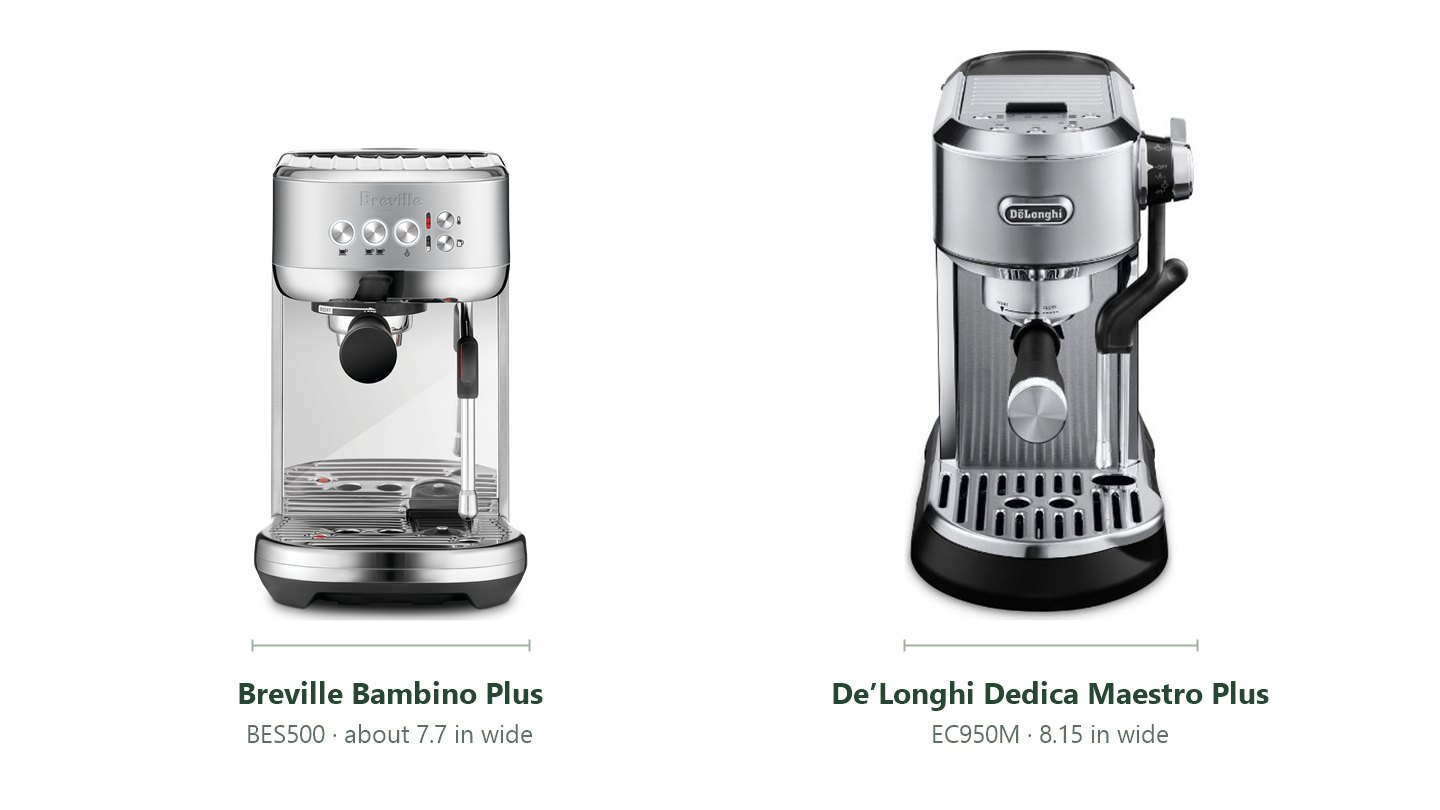
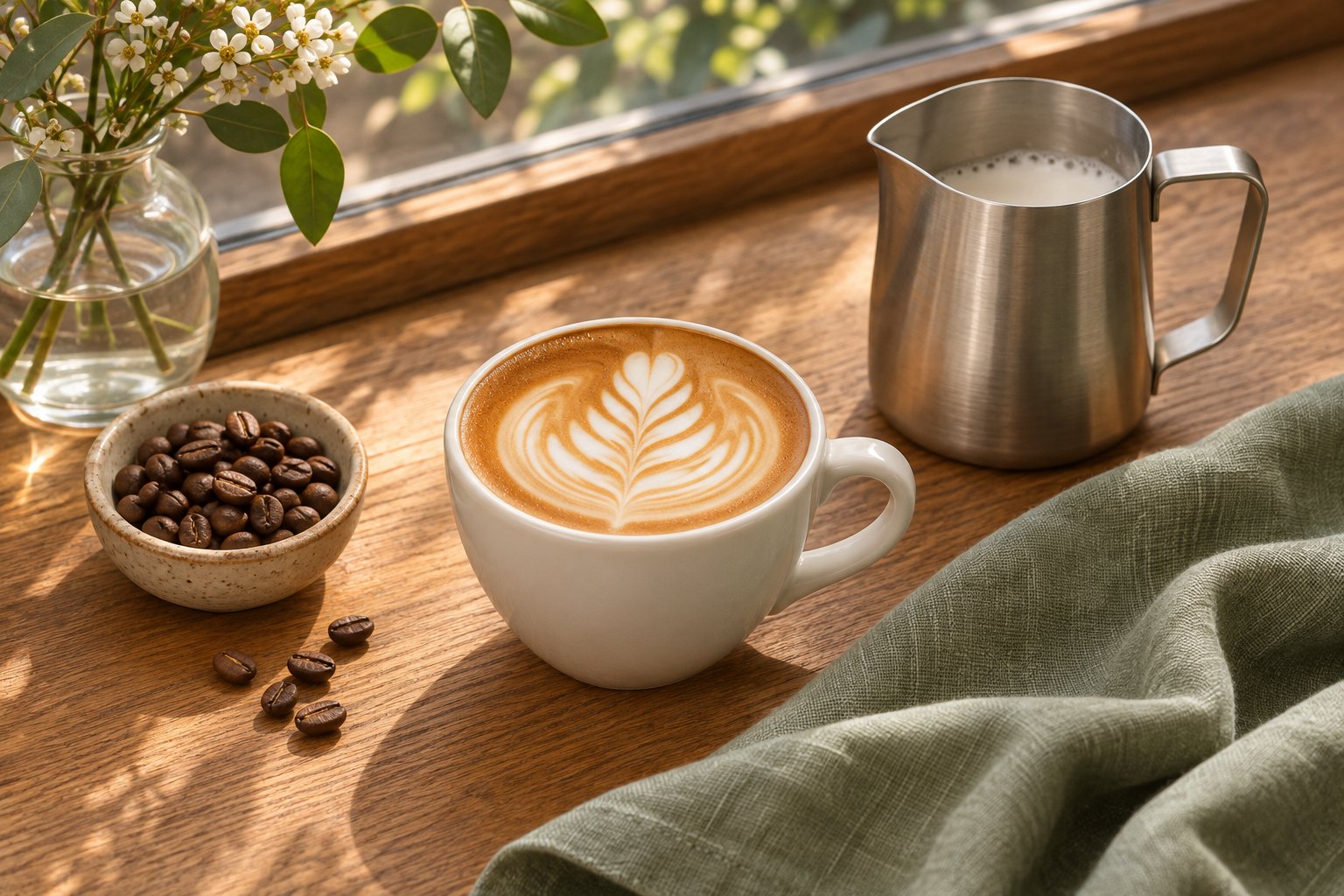
This guide compares published specifications and owner information. The cover pairs catalog photos using listed widths, and the food scene is an AI-generated illustration.
At a glance
| Detail | Breville Bambino Plus | De’Longhi Dedica Maestro Plus |
|---|---|---|
| Model | BES500 | EC950M |
| Milk | Automatic steam wand, adjustable temperature and texture | Auto LatteArt, three temperatures and three textures |
| Basket options | Single-wall and dual-wall baskets supplied | Single-wall and double-wall baskets supplied |
| Grinder | Separate | Separate |
| Listed tank capacity | 64 fl oz | 54 fl oz |
Draw the latte station before you buy
Put a tape rectangle on the counter where you’d actually make coffee. Reserve a second space for an espresso-capable grinder, even if the grinder will sit further back between uses. Then work through the motions with an empty mug: can you turn the portafilter, lift the milk pitcher, and remove or refill the water tank without moving everything?
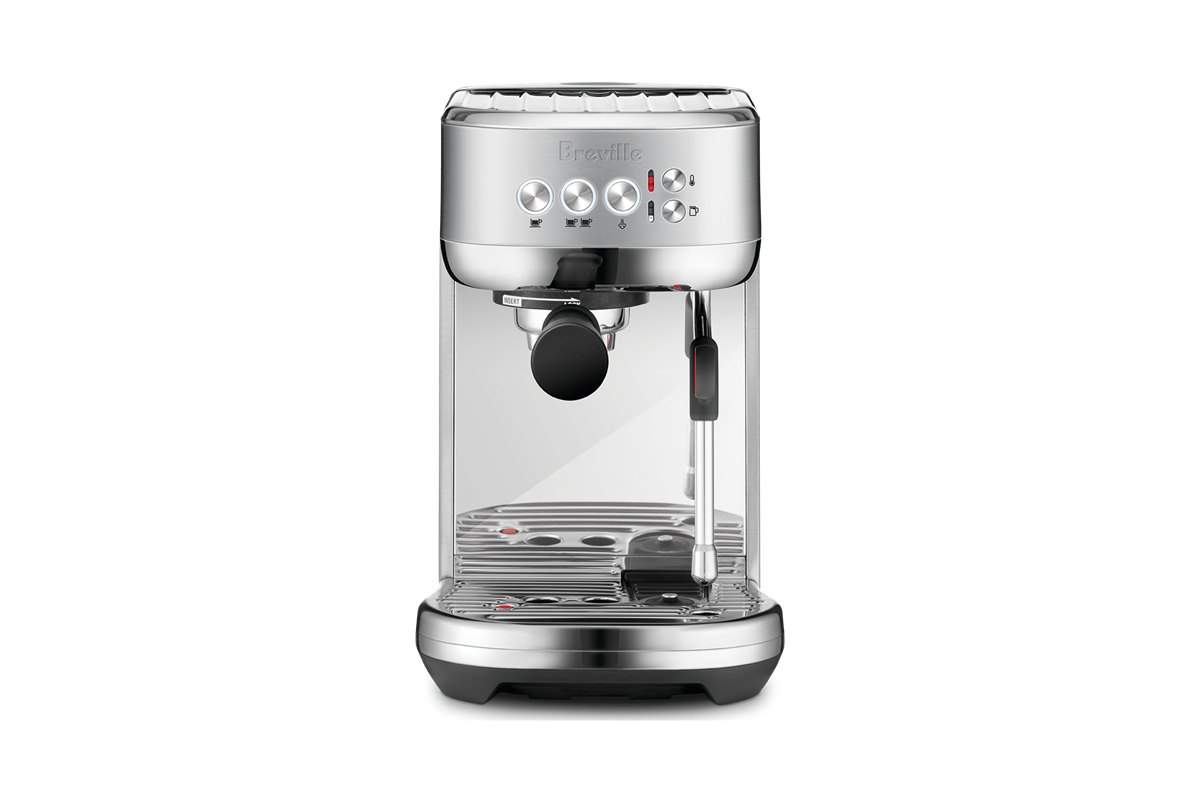
De’Longhi specifies a width of 8.15 inches. Breville’s comparison with its grinder bundle lists the Bambino Plus at about 7.7 inches wide, though its own listings show differing overall dimensions. That small width difference is a poor deciding factor if your tap, backsplash, or overhead cabinet is what limits the setup.
Think about the drink you make on a rushed morning
Automatic milk helps with one step of the routine. You’ll still dose coffee, tamp, lock in the portafilter, and clean up. Breville lets you adjust milk temperature and texture. De’Longhi gives you three choices for each and adds three brewing-temperature settings. If you switch often between dark roasts and lighter beans, think about whether you’ll actually use that extra control.
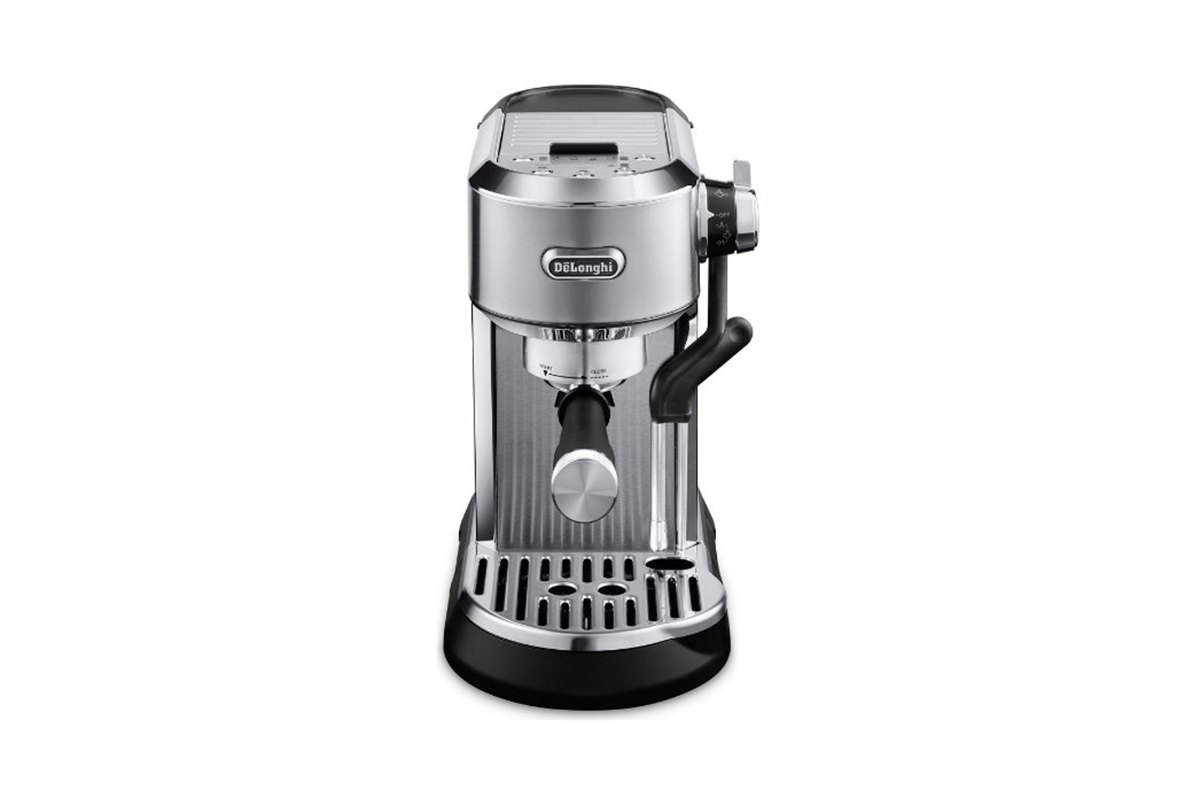
A narrower machine can feel bigger in practice when the milk pitcher has to sit in the only clear area beside it. Check your favorite mug against the machine’s cup clearance or plan to pull espresso into a smaller cup and pour it into your latte mug.
Budget for the basket and beans you’ll use
Both machines include a forgiving dual-wall option for pre-ground coffee. A single-wall basket is the better reason to invest in a capable grinder and spend time dialing in the shot. Check the manufacturer’s included accessories before buying a separate tamper or milk pitcher, since both packages already include those items.
If you already have a grinder and usually make the same milk drink, pick the machine with the controls you’re most likely to enjoy using every day. If you’re buying everything at once, compare the combined cost of machine and grinder. That total is a more useful budget than the machine price on its own.
Check current prices
Affiliate disclosure. We may earn a commission if you make a qualifying purchase through this link.
Affiliate disclosure. We may earn a commission if you make a qualifying purchase through this link.
Sources. Breville Bambino Plus official specifications, De’Longhi Dedica Maestro Plus official specifications, Breville’s machine and grinder dimensions, De’Longhi EC950M owner’s manual.
If you are still choosing a grinder for your espresso setup, see our Baratza Encore ESP vs. Fellow Opus 2 guide for the differences between numbered steps and a stepless dial.