
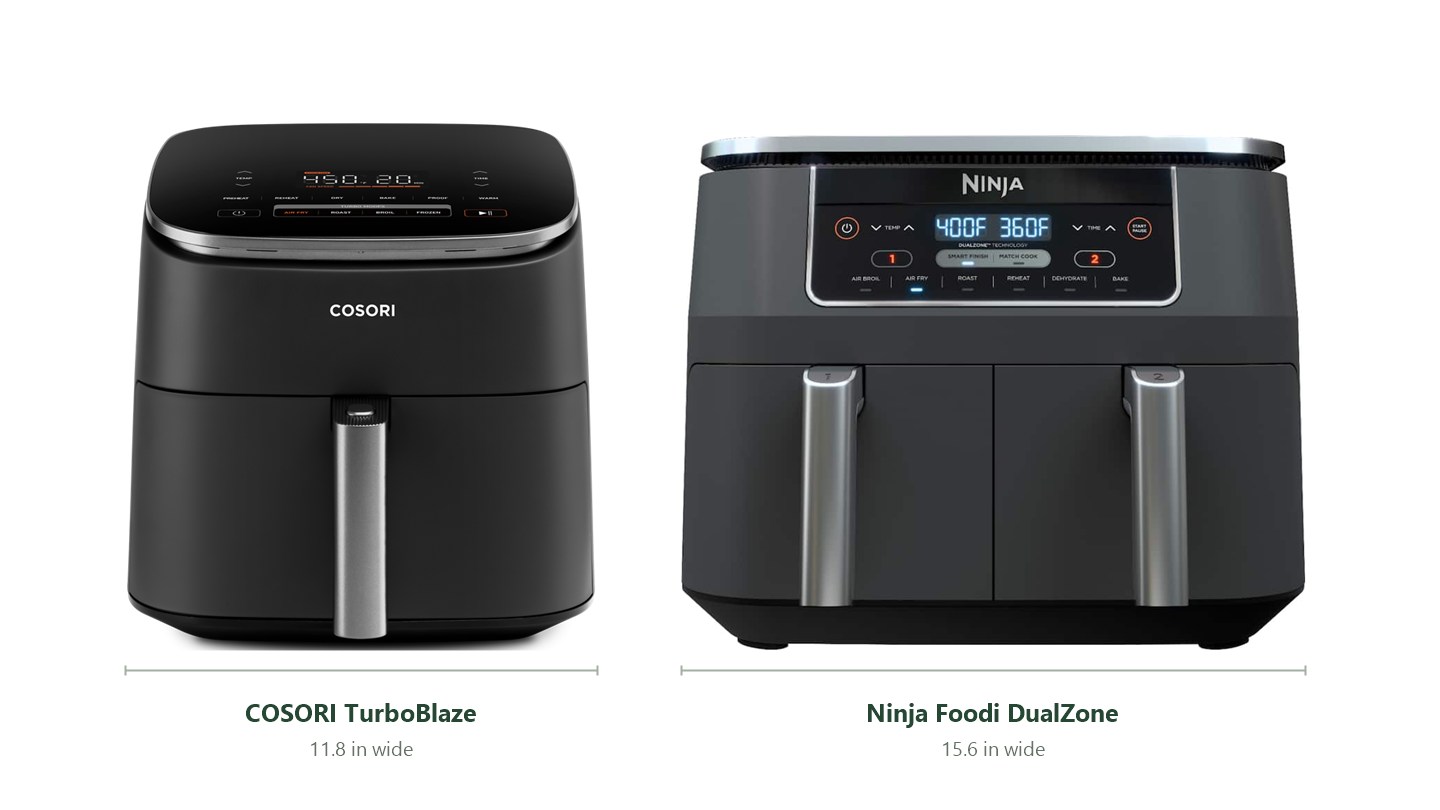
A basket can be big enough for dinner and still be the wrong shape for the way you cook. The COSORI TurboBlaze 6 Qt (CAF-DC601-KUS) gives you one continuous cooking space. The Ninja Foodi DualZone 8 Qt (DZ201) splits its capacity between two independently controlled drawers. Choosing between them starts with deciding what usually goes into your air fryer.
Which should you buy? Choose the COSORI if you want more uninterrupted space for one dish. Choose the Ninja if you often cook a main and a side that need different settings and want both ready for dinner at the same time.
We compared published specifications and owner’s guides for these U.S. models. The cover uses catalog photos scaled to each model’s width. The kitchen scenes in the article are AI-generated illustrations based on product reference photos.
COSORI vs. Ninja at a glance
| What to compare | COSORI TurboBlaze 6 Qt | Ninja Foodi DualZone 8 Qt |
|---|---|---|
| Model | CAF-DC601-KUS | DZ201 |
| Basket layout | One 6-quart drawer | Two separate 4-quart drawers |
| Cooking settings | One time and temperature per run | Independent settings or matching settings across both zones |
| Listed weight | 13.2 lb | 17.9 lb |
| Best fit | One dish or a batch with a shared cooking setting | Two dishes with different cook times or temperatures |
Thanksgiving Air Fryer Sides: A One- or Two-Basket Plan
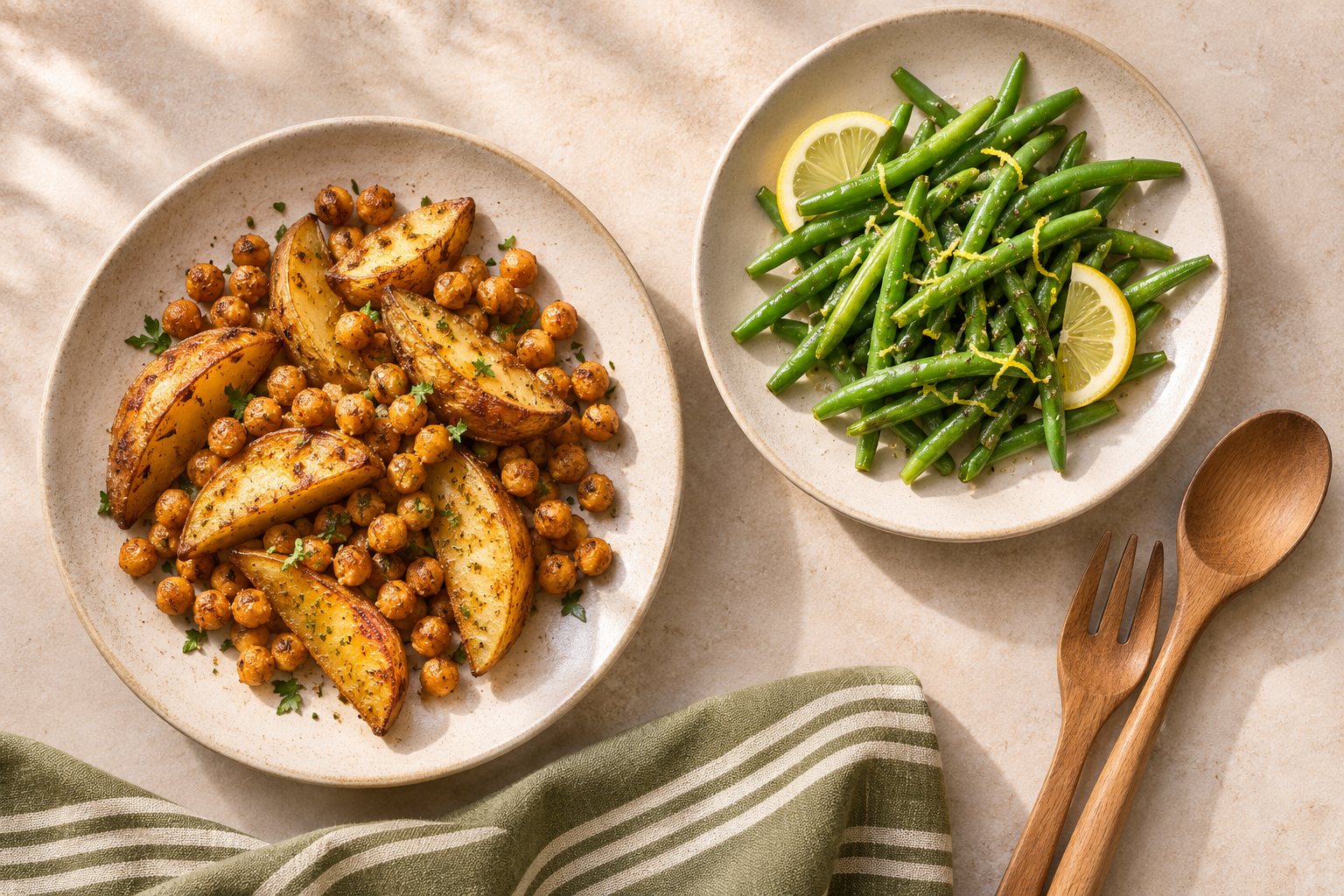
Use the air fryer for the side dishes that need crisp edges, especially when the oven is occupied. Jump to the basket picker. For a simple two-side menu, think roasted Brussels sprouts and diced sweet potatoes. Check how much of each will fit in a single layer before you choose the cooking order.
One basket: save the crispest side for last
On a single-basket model like the COSORI TurboBlaze, start with the sweet potatoes. Put the Brussels sprouts in last so they come out close to serving time. If either side needs two batches, split it before cooking. The extra batch belongs in your dinner schedule, even when the ingredients fit in one mixing bowl.
Two baskets: check each side’s footprint
On a dual-zone model like the Ninja Foodi DZ201, put the sweet potatoes in one basket and the sprouts in the other. Set each zone for its own recipe and use Smart Finish to coordinate the timers if both portions fit. If the sprouts need both baskets, cook them as one side across the two zones and give the potatoes a separate slot.
Before you start: Set out each portion, decide which side should finish last, and count the batches. Use the basket picker below to see which layout fits the way you cook.
Which basket layout fits your meals?
A capacity rating describes volume. Start with how you cook and what needs to lie flat.
How much food fits in one basket?
If you tend to cook one tray’s worth of food, focus on the biggest usable space in a single drawer. The COSORI’s entire six-quart capacity is together. In the Ninja, each four-quart drawer sets its own limit. That distinction matters for food you want to lay flat, such as broad pieces of cauliflower or a batch of breaded cutlets.
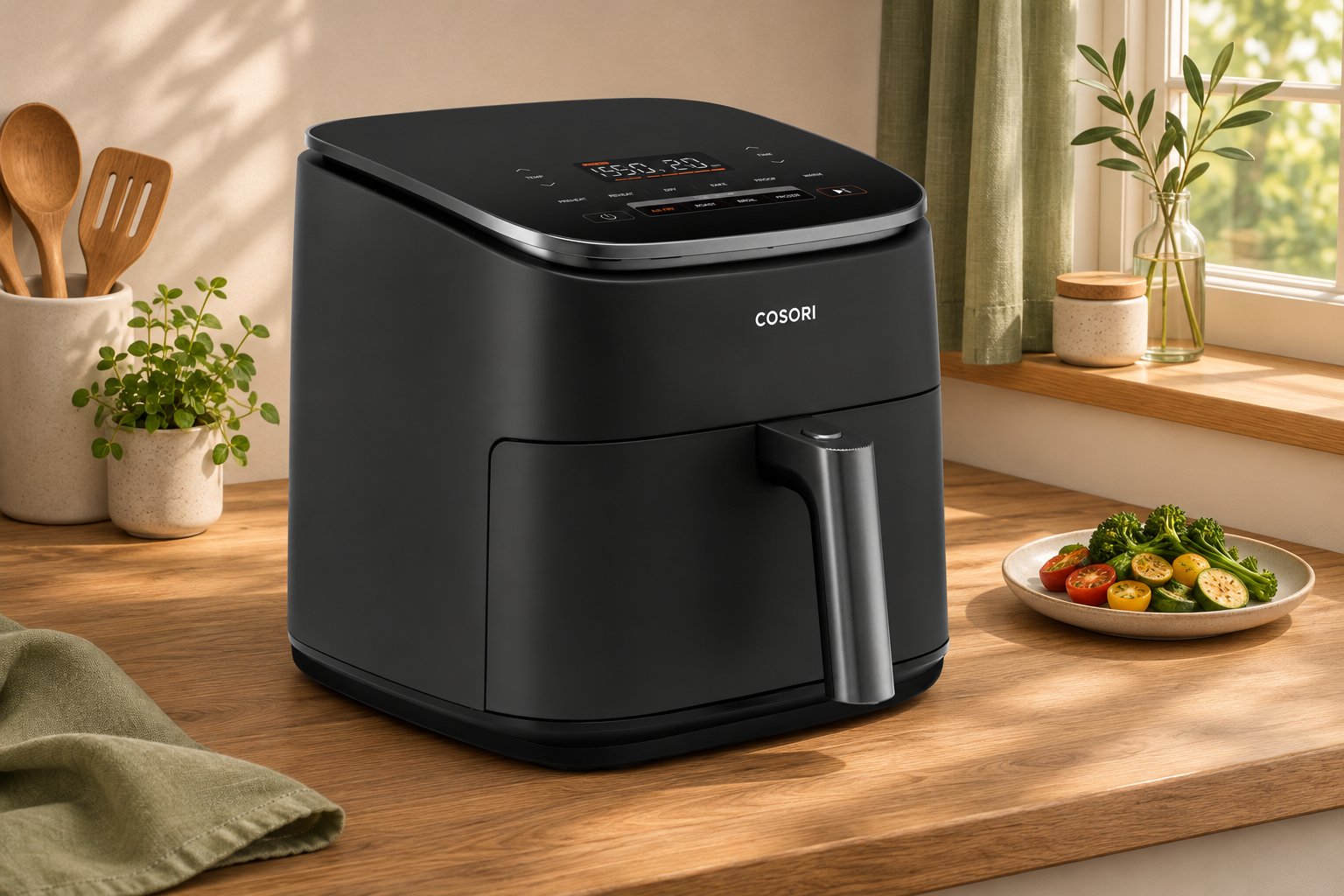
The Ninja still makes sense for larger batches you can split, such as two portions of fries. Match Cook copies the settings from one zone to the other. Quart ratings tell you about volume, so check basket measurements separately if you plan to fit a specific dish or accessory.
Which is better for a main and a side?
Think about a dinner with a longer-cooking main and a vegetable you’d rather cook separately. On the COSORI, you can add the side later if it fits and uses the same temperature. Otherwise, you’ll need another pan or a second run. On the Ninja, set up each basket separately. Smart Finish delays the shorter program so both zones are scheduled to end together.
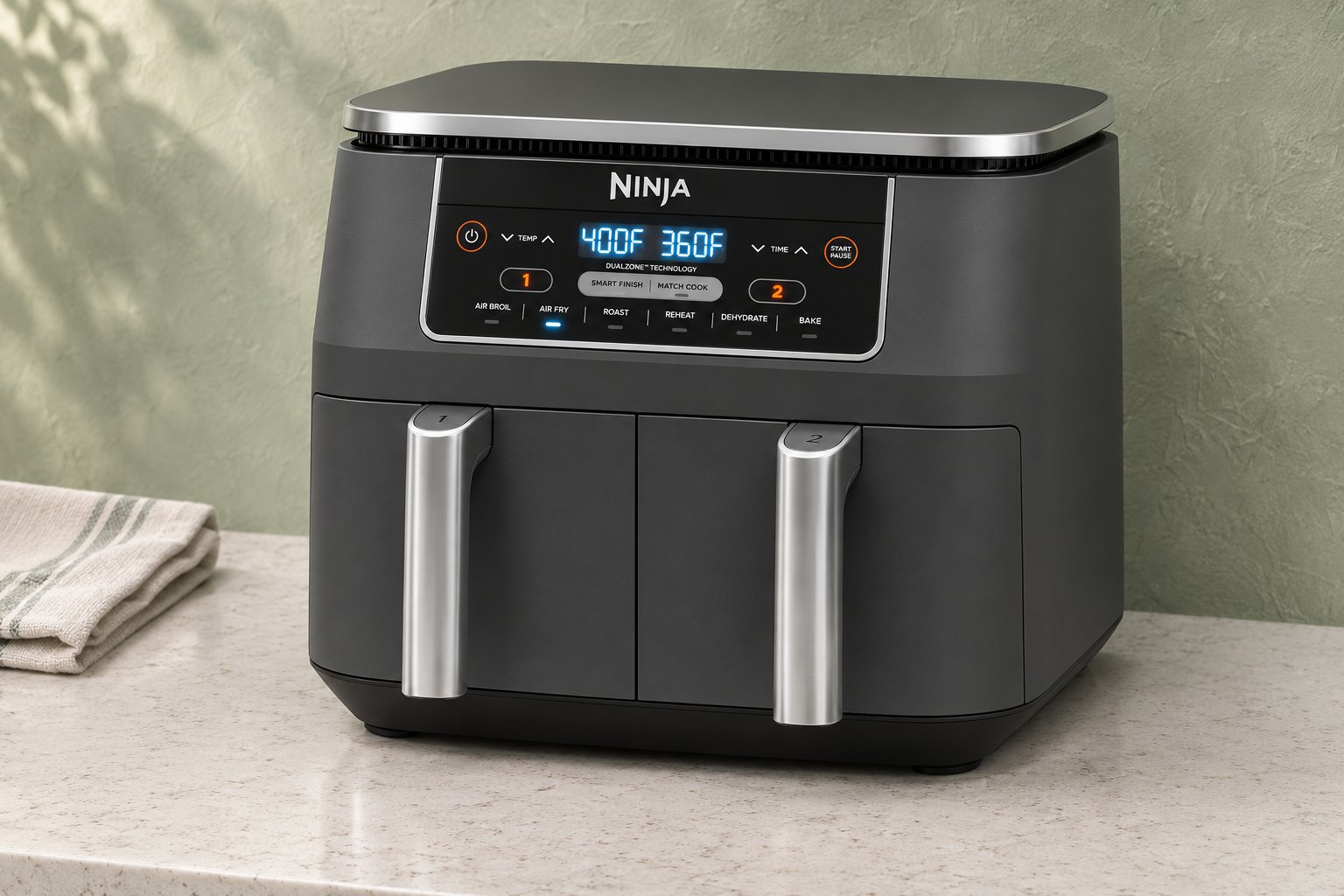
The second drawer matters most when it replaces a second round of cooking. If the stove already handles your side or you usually air-fry one part of dinner, the COSORI’s single drawer covers that routine with fewer parts to clean.
How much counter space should you plan for?
The COSORI is about 11.8 inches wide, 14.4 inches deep with the handle, and 11.9 inches tall. The Ninja is about 15.6 inches wide, 13.8 inches deep, and 12.3 inches tall in RTINGS’ measurements. The Ninja takes up about 3.8 more inches along the counter. Check the manufacturer’s clearance guidance and leave room to pull the drawers straight out.
If you expect to store it between uses, the COSORI is listed at 13.2 pounds compared with 17.9 pounds for the Ninja. If it will live on the counter, think about where you can actually set both drawers down when you’re serving.
The buying decision
Picture the last three meals you would have used an air fryer for. If you mostly needed one uninterrupted space, put the TurboBlaze on your shortlist. If two foods regularly needed separate settings, the DZ201 is the more useful setup. Compare the current prices once you know which feature you’d actually use.
Affiliate disclosure. We may earn a commission if you make a qualifying purchase through this link.
Affiliate disclosure. We may earn a commission if you make a qualifying purchase through this link.
Want a closer look at the single-basket option? Read our COSORI TurboBlaze 6 Qt buying guide.
Sources: COSORI product specifications, COSORI U.S. manual, Ninja DZ201 model and features at Target, Ninja DZ201 owner’s guide (archived copy), and RTINGS’ measured Ninja dimensions.